
Harvey County Mugshot Records
A booking photograph records appearance at one custody event. Harvey County's official Housed Inmates cards display a click-to-enlarge mugshot while a person is on the current roster. The image remains tied to the arrest and booking after physical release, but the county does not provide a public historic photo gallery. A saved image only establishes what the official page showed when captured. It does not establish guilt, current custody, or the later case result.
Kansas law distinguishes jail and correctional rosters from criminal investigation records. K.S.A. 45-221(a)(29) identifies photographs among public correctional fields, subject to the statute's limits. That does not open every image or jail-file document. Juvenile, sealed, expunged, security, medical, and investigative material may be restricted. The record custodian decides a focused request under the Kansas Open Records Act.
Find Harvey County Release Mugshots
Choose the photo channel from the person's actual custody path. A county-only booking belongs with the Sheriff. KASPER becomes relevant only after commitment to Kansas corrections. Federal locators do not promise a comparable booking image. Secondary publishers may keep old images, but they are weak evidence of release or current legal status.
| Channel | Photo? | Access and limit |
|---|---|---|
| Harvey Housed Inmates | Yes, for visible current cards | Official live roster, no released archive |
| Sheriff records request | Ask for inspection and copy | Focused KORA request; copying is not assured |
| KASPER | Commonly | Only for covered KDOC offenders |
| Kansas VINE | Interface may vary | Use for county custody status, not as a photo archive |
| News or agency release | Sometimes | May use a scene or press photo instead |
| Commercial archive | Sometimes | Can be stale and is not release proof |
| BOP or USMS | Not dependable | BOP locator is not a mugshot source; USMS limits release |
Compare an image to the booking number, name, and date before connecting it to a person. Common names create real risk. A current court disposition and the agency release record supply context that a photograph cannot provide.
Harvey Sheriff Mugshot Limits
The official Housed Inmates page displays photographs beside current booking, demographic, charge, bond, court-date, and hold fields. Its title controls how it should be used. The page is not advertised as past bookings, recent releases, or a mugshot archive. A future value in the card's “Release” position can appear while the person remains housed.
No official Harvey County Sheriff mobile app with a released-photo feed was verified. No official 24-hour or 72-hour photo view was found either. The Harvey County 24-Hour Releases fallback uses jail contact, VINE, the court, and a release-record request instead of inventing a feed. If a photograph was lawfully saved while visible, preserve its source and capture date and still confirm the later disposition.
The Harvey roster screenshot source shows the current-custody layout.
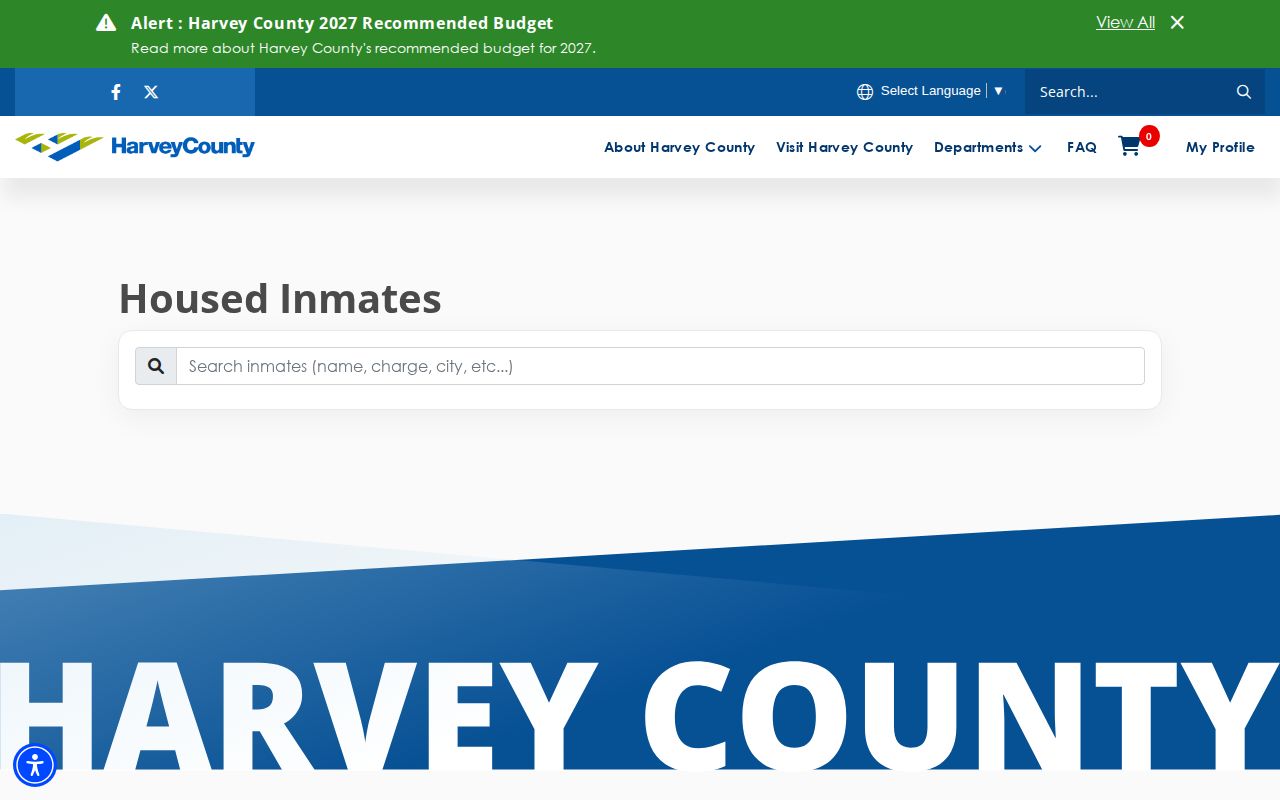
The roster layout explains where a current mugshot appears, while its Housed Inmates heading warns against treating the screen as a release gallery.
Request Harvey County Booking Photos
A focused Kansas Open Records Act request is the official route after the Harvey County card disappears. The county's online form redirected to a login screen during research, so confirm submission instructions with Sheriff's administration at 120 E. 7th Street, Newton, 316-284-6960, weekdays from 8 a.m. to 5 p.m. The Detention Center at 800 N. Main Street, 316-284-6959, can route immediate booking questions.
- Give the full name, booking date range, and any known birth date or booking number.
- Ask for the existing booking summary and the photograph tied to that booking.
- Request inspection plus an electronic copy, and ask for a fee estimate before work begins.
- If part is closed, ask for the nonexempt remainder and the statutory basis for withholding.
- Match the returned photograph to the release transaction and current court disposition.
K.S.A. 45-218 requires a response as soon as possible and by the end of the third business day, though production can take longer with an explanation. K.S.A. 45-219 allows reasonable actual cost and advance payment. It also does not require an agency under that provision to provide copies of every photograph or visual item. Ask, but do not assume a digital copy must be supplied. The Harvey County release-record process covers the complete transaction request.
Secondary Harvey Mugshot Sources
Local or regional news may preserve an arrest and release chronology after a roster changes. Its image might be a booking photograph, agency handout, scene image, or ordinary press photo. Read the caption and source. News supplies context, but the Sheriff's release transaction and court docket remain stronger evidence of what happened.
Commercial mugshot and directory sites can retain an old image long after release, dismissal, or expungement. Their continued display proves neither current custody nor case outcome. No commercial mugshot, data-broker, or payment-for-removal link is endorsed here. Treat the category only as a warning that a copy may persist beyond the official display period. Verify facts through the Sheriff, court, or KDOC rather than relying on a site's headline.
Federal channels are narrower. The U.S. Marshals Service generally does not release prisoner photos, personal histories, or arrival and departure times. The BOP locator focuses on custody and release information, not dependable mugshot discovery. A federal docket or originating agency may explain a case, but no photograph should be promised.
KASPER Harvey Offender Photos
KASPER commonly supplies a photograph for covered Kansas corrections records. Search by KDOC number when known, or use exact and partial name searches and compare public identity and conviction details. Then read the current status, location, admissions, movements, and release or discharge entries. A photograph can help distinguish people with similar names, but it must not become the sole match key.
This channel applies only if the person entered KDOC custody. Someone who posted bond at the Harvey County Detention Center and never went to state prison will not gain a KASPER record from that local booking alone. A former state prisoner may remain in KASPER while on parole or postrelease supervision, and covered discharged records can remain available. The photo can therefore outlast institutional custody without proving that the person is still confined.
The manifest's discharged KASPER exemplar illustrates the kind of state record that can join a photograph to status and movement history.
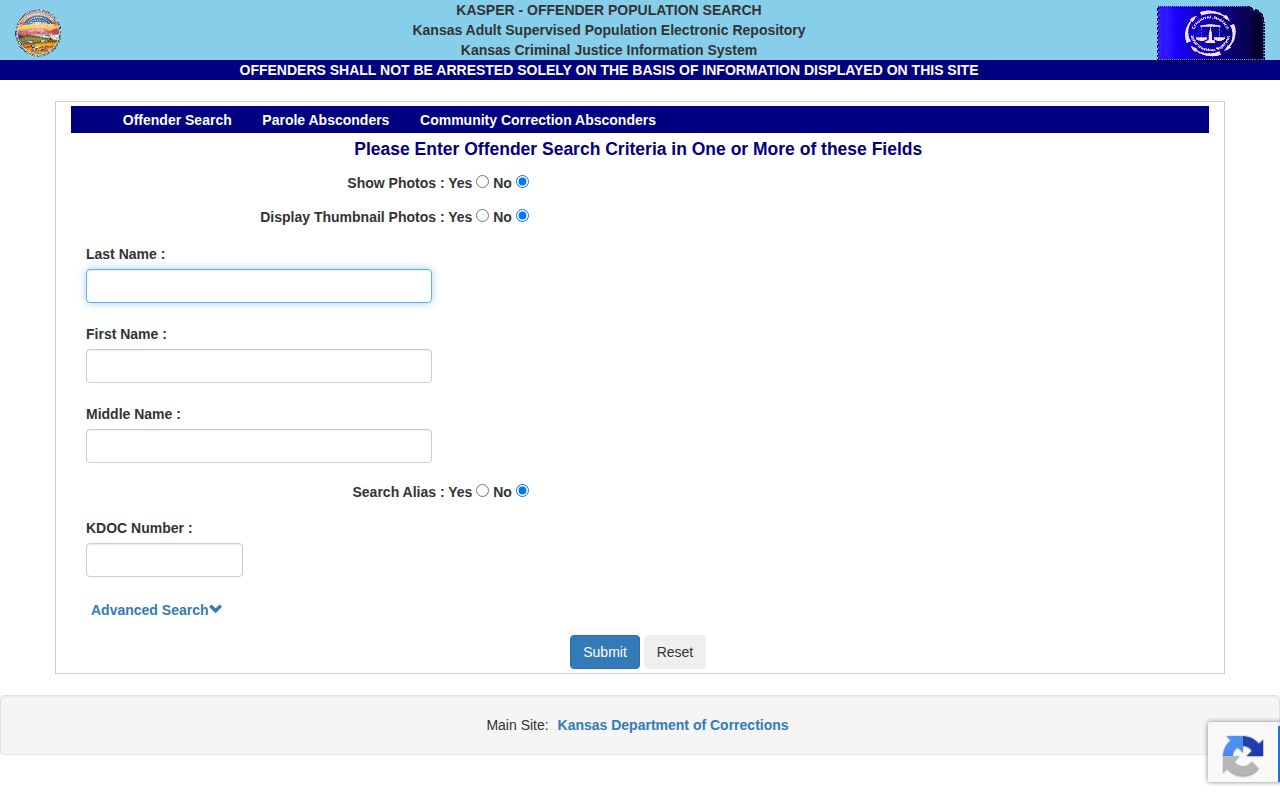
The state record is useful because it adds custody context to the image. Confirm a disputed or precise release date through KDOC records rather than reading the photograph as evidence by itself.
Verify Harvey Booking Photo Context
Record four facts whenever a Harvey County mugshot is used to identify a release record: the official source, capture date, booking or KDOC number, and the status shown at that time. Next, compare the court disposition. A bond order, dismissal, sentence, transfer, probation order, or expungement can change the meaning of an image that looks unchanged.
Different agencies can also possess different photographs. A Harvey jail image documents county booking. A KASPER photograph belongs to a state corrections record. News may publish an agency handout or ordinary file photo. Combining them without checking dates can merge separate custody events or even separate people. Name variants, suffixes, and common names make the booking and case numbers more reliable than visual resemblance.
When sources conflict, the jail's booking and release transaction controls its physical custody event. A filed court order controls the legal authority. KDOC movement data controls the state correctional sequence. Describe the scope of each record instead of forcing them into one unsupported timeline.
Harvey Mugshots and Expungement
Release alone does not erase a booking photograph. Kansas conviction expungement is governed chiefly by K.S.A. 21-6614, while K.S.A. 22-2410 addresses arrest-record expungement. Eligibility and effect depend on the record, offense, sentence, supervision discharge, and current law. Many waiting periods run from sentence satisfaction or discharge from supervision, not the day the jail door opened. Court instructions and the statute should control.
An expunged or sealed official record may become unavailable, but that does not ensure every previously copied image disappears at once. Send the relevant order to the official custodian and ask what public display or access should change. For an outside publisher, use its correction process without assuming payment alters the Sheriff, court, or KDOC source. The Kansas statute sweep found no specific statewide “pay to remove” mugshot law, so no broader promise should be made.
This privately operated site is not a consumer reporting agency under the FCRA. Mugshot information cannot be used for credit, employment, tenant, insurance, or another FCRA-covered purpose.
A photograph captures one moment. Pair it with the presumption of innocence, the latest public disposition, and the exact custody event. Dismissal, acquittal, transfer, release, supervision, and discharge each mean something different.
Public Record Search
Sponsored Results